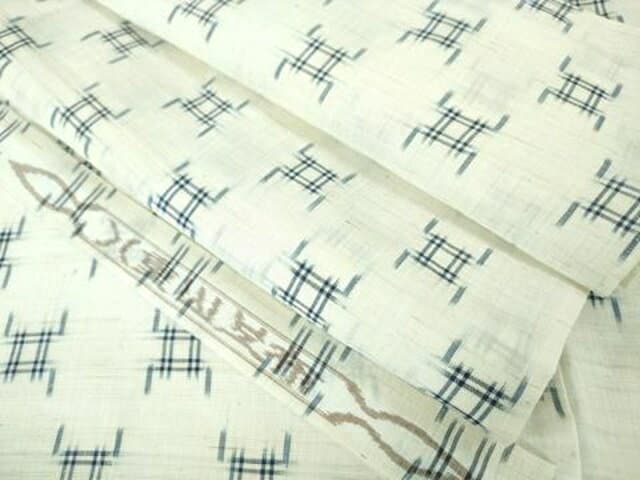
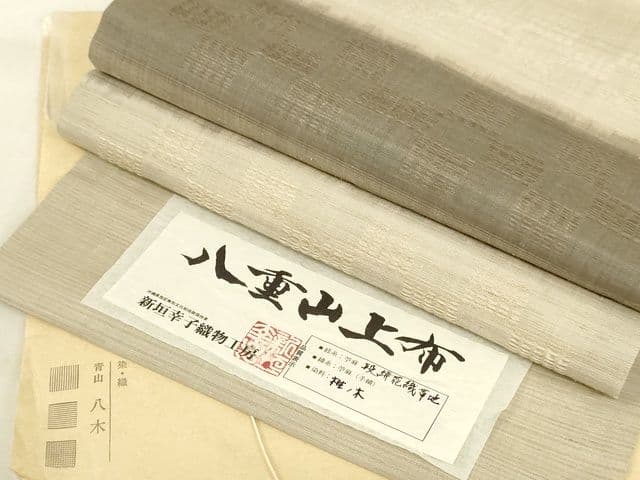
Okinawa Yaeyama Jofu Handwoven Ramie Summer Kimono, Kooru-Dyed Mustard Kasuri
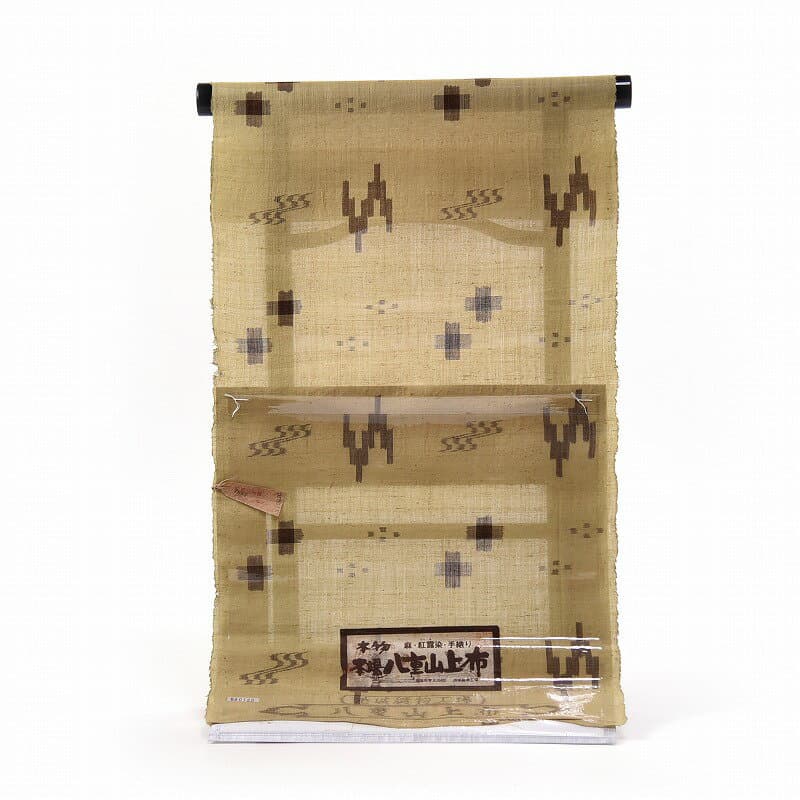
八重山上布 フルオーダー手縫いお仕立て代込み 夏物 沖縄県本場八重山上布 麻・紅露染(くーる)・手織り 最高級の紬着物 芥子色/絣模様 着物.おしゃれ着物.街着.外出着.普段着.ショッピング.あたなだけのお着物にお仕立て致します。【送料無料】
mustard color / kasuri patternさわらび〜ほりだし堂〜
Japanese name八重山上布
In Okinawa’s Yaeyama islands, ramie thread, plant dyes, kasuri planning, and seawater finishing shape a cloth known for its crisp touch and quiet summer clarity.
Information last updated 119 days ago
八重山上布 フルオーダー手縫いお仕立て代込み 夏物 沖縄県本場八重山上布 麻・紅露染(くーる)・手織り 最高級の紬着物 芥子色/絣模様 着物.おしゃれ着物.街着.外出着.普段着.ショッピング.あたなだけのお着物にお仕立て致します。【送料無料】
mustard color / kasuri patternさわらび〜ほりだし堂〜
平和屋本店■希少 夏物 沖縄県無形文化財指定 本場八重山上布 麻 藍 反端付き 逸品 未使用 DZAA2048kh4
unused, with fabric remnant平和屋
平和屋本店■希少 夏物 沖縄県無形文化財指定 本場八重山上布 九寸名古屋帯 青山八木扱い たとう紙付 麻 逸品 未使用 KAAA1742kk4
unused, with tatou paper平和屋
First time buying on Rakuten? How residents in Japan order →
Yaeyama Jofu is made around Ishigaki City and Taketomi Town in Okinawa’s Yaeyama islands. The cloth is a pre-dyed plain-weave kasuri textile made with ramie thread; its weft is beaten in with a hand shuttle, and the kasuri yarn is dyed by hand tying or hand rubbing. Kuru, indigo, fukugi, acacia, seawater, and sun all enter the work before the finished cloth carries its pale ground, plant color, and clean ramie hand.
Yaeyama Jofu is tied to Ishigaki City and Taketomi Town, where ramie cultivation, plant dye gathering, weaving, and sea finishing belong to the same island setting. The name points to a concrete production area, not a loose regional mood.
Technically, the cloth is defined as pre-dyed plain-weave kasuri. The weft is inserted with a hand shuttle, and the kasuri yarn is colored through hand tying or hand rubbing before it reaches the loom; those steps create the disciplined spacing of the finished pattern.
Ramie, a plant in the nettle family, can be harvested four or five times a year. After cutting, the stalks are soaked in water for several hours, the inner fiber is scraped from beneath the outer skin, and the fiber is dried in the shade.
The dried fiber is then moistened, split finely with the fingertips, and spun into yarn. Warp yarn is twisted with a spinning wheel, while weft yarn is twisted by hand during spinning; the yarn has to keep an even thickness before the later work of warping, dyeing, and weaving can proceed cleanly.
Yaeyama Jofu draws color from plants associated with the islands. Kuru, fukugi, acacia, and Indian indigo appear in the dye work, giving the ramie thread a palette rooted in gathered and prepared plant materials.
The color is planned at the yarn stage rather than added after weaving. Fermented indigo, plant dye baths, and mordanting where used help place color on the threads before they become kasuri, so the later pattern begins as measured lengths of dyed and resisted yarn.
Kasuri can be made by tying the yarn before dyeing, or by rubbing dye into the yarn with a bamboo brush. In the tied method, marks are placed according to the design, then cotton thread or cord is wrapped tightly around the portions meant to resist color.
The motifs include flowing water, birds, fireflies, and everyday tools. Older pattern books sent from the Shuri court are described as still being carried forward in design practice; here, continuity sits in marked yarn, resist ties, brush-applied dye, and the loom rather than in a vague decorative label.
After weaving, the cloth still passes through finishing. Drying, color setting, and sea exposure follow the loom; seawater and sun help whiten the pale ground and fix the kasuri color, making the coastline part of the cloth’s final surface.
Mallet beating then adds luster and improves the hand. The ramie gives a dry, smooth feel, and the cool impression of the colors suits summer kimono cloth; the same craft family is also made as obi, tapestries, and noren curtains.
Yaeyama Jofu’s history includes coercive administration. From 1637, the head-tax tribute-cloth system continued for more than 250 years, with the Ryukyu court supervising quality and specifying kasuri patterns and colors; the technical refinement of the cloth sits beside that forced production setting.
After the head tax ended, organized production expanded in the late Meiji period, was interrupted during World War II, and continued after the war through a small number of makers. The Ishigaki City Weaving Cooperative was founded in 1976 and brings together specialists in Yaeyama Jofu and Yaeyama Minsaa, with work in ramie fields, mountain dye gathering, sea exposure, joint material purchasing, joint sales, and successor training.
Yaeyama Jofu can be followed through a single ramie thread: harvested on island fields, soaked, stripped, split, spun, dyed, arranged for kasuri, woven, taken to seawater and sun, and beaten for luster. Its cool touch and restrained plant color come from those repeated acts, and from the Ishigaki and Taketomi setting that holds field, mountain, loom, and shore together.
Compiled from public records and official sources; see the recognition links below. Details may change over time.
Where this product is officially registered, designated, or recognized in Japan.
Traditional craft
Designated a Traditional Craft (dentō kōgeihin) by Japan's Ministry of Economy, Trade and Industry.
Sources1
It is written as 八重山上布 in Japanese. Search Rakuten and other Japanese sites with that spelling — the English name will not bring up the listings.
Yaeyama Jofu is a ramie kasuri textile made around Ishigaki City and Taketomi Town in Okinawa's Yaeyama islands. It is defined by pre-dyed plain weave, hand-shuttle weft insertion, and kasuri yarn dyed by hand tying or hand rubbing. Ramie fiber is harvested, soaked, stripped, split, and spun; plant dyes such as kuru, fukugi, acacia, and indigo color the yarn, while sea exposure and mallet beating help finish the cloth's crisp summer hand.
Ramie can be harvested four or five times a year and is soaked, stripped, dried, split, and spun before weaving. Sea exposure helps whiten the pale ground and set kasuri color, while mallet beating adds luster and improves the hand. From 1637, the head-tax tribute-cloth system lasted more than 250 years and involved supervision of quality, kasuri patterns, and colors. The Ishigaki City Weaving Cooperative was founded in 1976 and includes specialists in Yaeyama Jofu and Yaeyama Minsaa dyeing and weaving.
Yaeyama Jofu is used mainly as cloth for summer kimono. Besides kimono cloth, it is also made into obi, tapestries, and noren curtains.
Naturally dyed textiles shed some colour on first wash. Hand-wash separately with a neutral detergent, avoid long soaking and bleach, and dry in the shade to prevent fading. Silk, ramie, and traditionally dyed pieces often need professional cleaning — the care label on the listing takes precedence.
Most options are shelf-stable, boxed, and travel well, so they suit gifting or bringing home. Confirm the final storage and delivery terms on the Rakuten listing.
On Rakuten: the shops listed here right now are さわらび〜ほりだし堂〜, 平和屋. We don't sell directly; purchase, payment, stock, and delivery are all handled on the Rakuten product page.