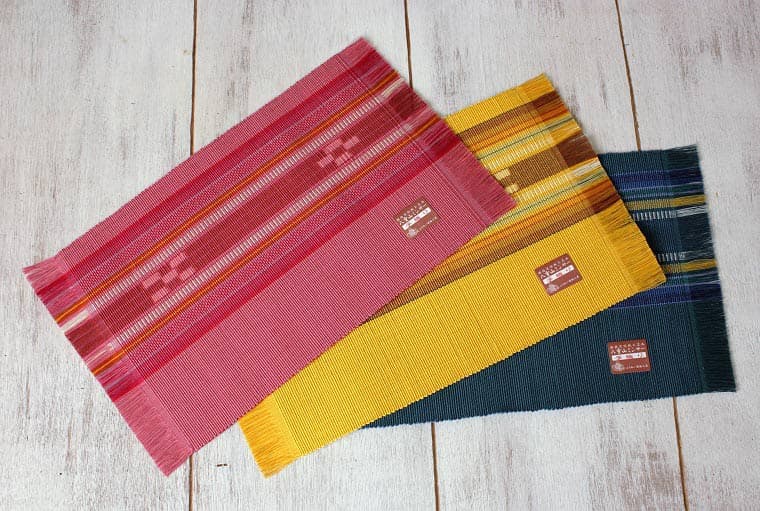
datta Ishigaki Handmade Yaeyama Minsa Center Cloth
datta.沖縄南の島陶芸工房 |datta 石垣島の手作りの織物・八重山ミンサー(小)経済産業大臣指定品 新柄みんさーセンター
small, approx. 16 x 28 cmdatta.やちむんとシーサーの工房
4.9 / 45 reviews
Japanese name八重山ミンサー
On Ishigaki, pure cotton belts, square kasuri motifs, weaving rooms, mountain dye gathering, and sea bleaching shape the recognizable cloth of Yaeyama Minsa.
Information last updated 15 days ago
datta.沖縄南の島陶芸工房 |datta 石垣島の手作りの織物・八重山ミンサー(小)経済産業大臣指定品 新柄みんさーセンター
small, approx. 16 x 28 cmdatta.やちむんとシーサーの工房
4.9 / 45 reviews
 3 images
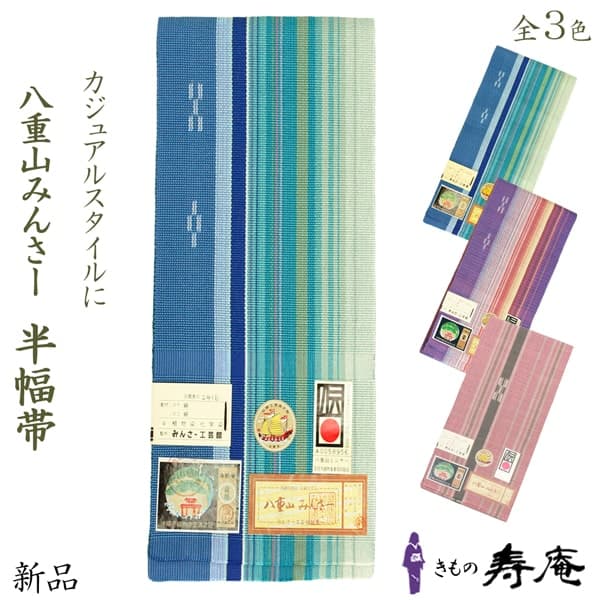
\ クーポンあり / 半幅帯 ミンサー 帯 (ランキング一位受賞) 帯 沖縄 八重山 ミンサー織 ブルー パープル ピンク 青 紫 ローズピンク くすみカラー着付 敬老の日贈り物 プレゼント 四寸 半巾 単衣帯 みんさー織 綿 日本製 手織リバーシブル
Blue / Purple / Rose Pink帯きもの寿庵 京都発 新品和装専門
5.0 / 24 reviews
 3 images
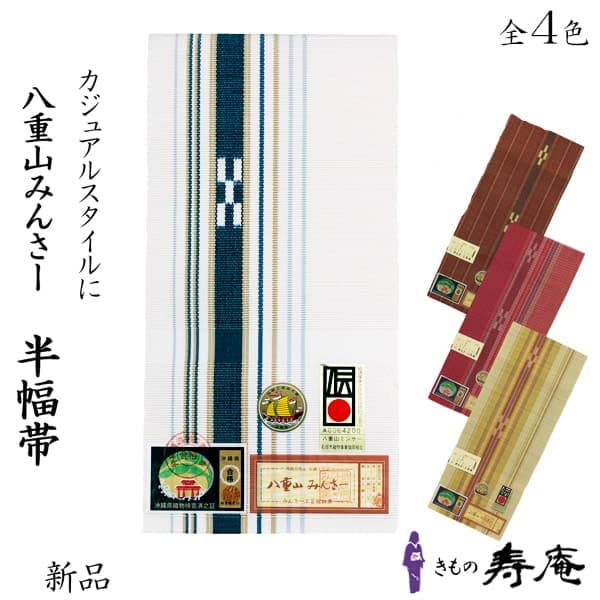
半幅帯 クーポンあり ミンサー 帯 沖縄 八重山 ミンサー織 白 ホワイト 海老茶 赤 レッド ベージュ 浴衣 帯 着付 敬老の日贈り物 プレゼント 単衣帯 リバーシブル みんさー織 綿 四寸 半巾 手織伝統工芸 新裕二 沖縄 石垣島 新品 贈り物
white / reddish brown / red / beige帯きもの寿庵 京都発 新品和装専門
4.9 / 16 reviews
First time buying on Rakuten? How residents in Japan order →
Yaeyama Minsa is a cotton textile tied to Okinawa’s Yaeyama area and especially to Ishigaki. In Tonoshiro, Ishigaki City, Azamiya Honten Minsah Kogeikan stands as a Yaeyama minsah weaving workshop, while the Ishigaki City Textile Cooperative brings together people who dye and weave Yaeyama Jofu and Yaeyama Minsa. The textile’s path runs from a narrow cotton waist sash to handwork, square motifs, and everyday objects that still carry the pattern beyond the loom.
The geography of Yaeyama Minsa is concrete in Tonoshiro, Ishigaki City. The Ishigaki City Textile Cooperative is located at Tonoshiro 783-2, and Azamiya Honten Minsah Kogeikan is listed nearby at Tonoshiro 909 as a Yaeyama minsah weaving workshop. One place gathers specialists in dyeing and weaving Yaeyama Jofu and Yaeyama Minsa; the other offers a workshop setting where hand-weaving experiences are part of the textile’s public face. Together, these addresses place the cloth in Ishigaki streets, rooms, and looms rather than in a loose island image.
The older minsah belt is described through cotton, width, and use. Its warp and weft are pure cotton, and the name is explained through a narrow cotton width, with mensa linked to a slim cotton band. The belt was mainly used as a waist sash for ordinary daily clothing, so Yaeyama Minsa’s early life sat close to the body, holding garments in place through a strip of cotton thread and woven width.
Yaeyama Minsa is recognized by a kasuri arrangement of five and four square forms. The five and four are read through the phrase “itsuyo made mo,” a wish for lasting connection; side yashiromi or yashirami motifs and vertical stripes are also explained through meanings connected with visiting and staying together. The pattern can be read as a surface of squares, side bands, and lines, each placed in the cloth with a transmitted meaning attached to its position.
The Ishigaki City Textile Cooperative was established in 1976 and has 61 members who specialize in dyeing and weaving Yaeyama Jofu and Yaeyama Minsa. Its shared work includes purchasing and supplying raw materials, gathering and shipping finished cloth, and training successors. The same cooperative description places textile labor among ramie fields, dye-gathering trips into the mountains, and sea bleaching at the shore. The cloth therefore carries loom work together with field work, mountain gathering, shoreline bleaching, and the training of the next generation of makers.
Modern Yaeyama Minsa appears in forms beyond the waist belt. Exhibition text connected with Ishigaki Minsah Kogeikan describes it as a cotton textile transmitted in the Yaeyama area for about 400 years, and names skilled handwork, natural materials, design, belts, bags, shirts, and small goods. At the Tonoshiro Kogeikan, hand-weaving experiences let visitors meet the rhythm of cotton threads and five-and-four kasuri at the loom. The same recognizable pattern now moves between wearable cloth, carried objects, small daily goods, and the practice of weaving by hand.
Yaeyama Minsa is strongest when seen through tangible details: Tonoshiro addresses on Ishigaki, pure cotton warp and weft, the five-and-four kasuri, ramie fields and sea bleaching, and present-day shirts, bags, small goods, and weaving experiences. From a daily waist sash to contemporary cloth objects, it keeps place, material, motif, and handwork visible in one recognizable textile.
Compiled from public records and official sources; see the recognition links below. Details may change over time.
Where this product is officially registered, designated, or recognized in Japan.
Traditional craft
Designated a Traditional Craft (dentō kōgeihin) by Japan's Ministry of Economy, Trade and Industry.
Sources1
It is written as 八重山ミンサー in Japanese. Search Rakuten and other Japanese sites with that spelling — the English name will not bring up the listings.
Yaeyama minsa is a cotton textile tied to Okinawa's Yaeyama area and Ishigaki. Its older form was a narrow pure-cotton waist belt worn with everyday clothing, and its signature five-and-four square kasuri pattern carries the meaning of "itsuyo made mo." The Ishigaki City Textile Cooperative, founded in 1976, brings together weavers of Yaeyama Jofu and Yaeyama Minsa who also handle raw materials, sea bleaching, and training successors. Today the textile also appears in bags, shirts, and small goods.
The Ishigaki City Textile Cooperative has 61 members. The cooperative's work includes ramie fields and gathering dye materials in the mountains. The cooperative also handles shared purchasing of raw materials and shipping of finished cloth. Azamiya Honten Minsah Kogeikan, located in Tonoshiro, Ishigaki City, offers hand-weaving experiences in Yaeyama minsah.
The minsah belt was mainly worn as an everyday waist sash. Yaeyama Minsa was formerly given as a gift from women to men, with the five-and-four kasuri pattern carrying the meaning of "itsuyo made mo."
Naturally dyed textiles shed some colour on first wash. Hand-wash separately with a neutral detergent, avoid long soaking and bleach, and dry in the shade to prevent fading. Silk, ramie, and traditionally dyed pieces often need professional cleaning — the care label on the listing takes precedence.
Most options are shelf-stable, boxed, and travel well, so they suit gifting or bringing home. Confirm the final storage and delivery terms on the Rakuten listing.
On Rakuten: the shops listed here right now are datta.やちむんとシーサーの工房, 帯きもの寿庵 京都発 新品和装専門. We don't sell directly; purchase, payment, stock, and delivery are all handled on the Rakuten product page.