 3 images
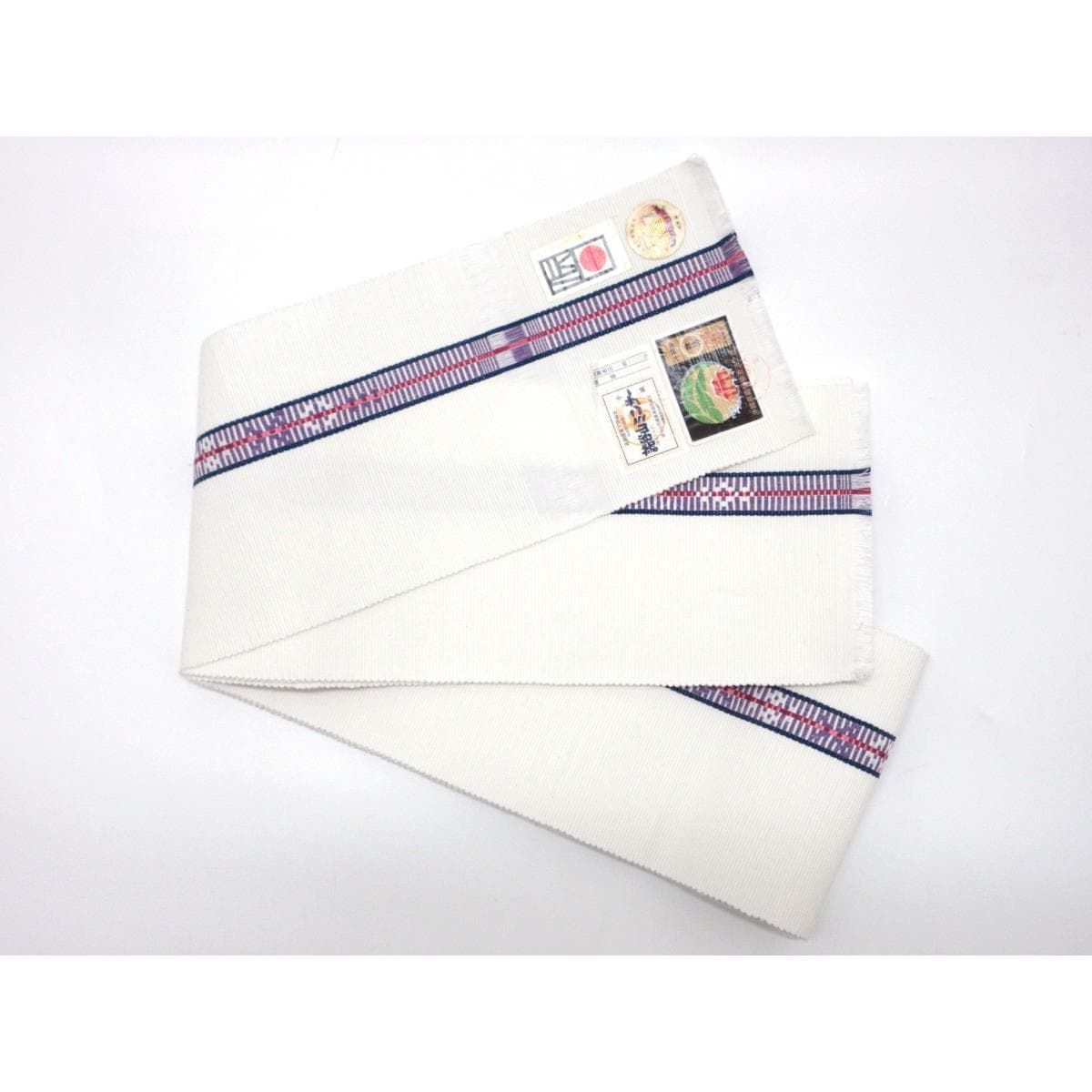
Yomitan-zan Minsa Half-Width Obi
【新品】半幅帯 読谷山ミンサー【新品】
white with purple and pink stripesKOMEHYO ONLINESTORE 楽天市場店
Japanese name読谷山ミンサー
Yomitan-zan Minsaa is a slim cotton band from Yomitan Village, where a bamboo skewer lifts warp threads so colored yarn can rise on the cloth.
Information last updated 119 days ago
3 images【新品】半幅帯 読谷山ミンサー【新品】
white with purple and pink stripesKOMEHYO ONLINESTORE 楽天市場店
First time buying on Rakuten? How residents in Japan order →
In Yomitan Village on Okinawa’s main island, Yomitan-zan Minsaa begins as a narrow cotton band. The name ties “min” to cotton and “saa” to narrowness, while the surface is shaped by guushi-bana, a method in which a bamboo skewer lifts selected warp threads. Around Zakimi, where the cooperative and traditional craft center are based at 2974-2, the textile can be understood through displays, coaster weaving, cotton kasuri yarn, plant color, and the people who rebuilt the weave in 1964.
Compiled from public records and official sources; see the recognition links below. Details may change over time.
Where this product is officially registered, designated, or recognized in Japan.
Traditional craft
Designated a Traditional Craft (dentō kōgeihin) by Japan's Ministry of Economy, Trade and Industry.
Sources1
It is written as 読谷山ミンサー in Japanese. Search Rakuten and other Japanese sites with that spelling — the English name will not bring up the listings.
Yomitanzan minsa is a narrow cotton band woven around Yomitan Village, Okinawa. Its name links cotton (min) and narrowness (saa). The defining technique (guushi-bana) uses a bamboo skewer (guushi) to lift warp threads so colored yarn rises on the cloth. Materials include pre-dyed cotton kasuri yarn, hand tying, and plant dyes such as Ryukyu indigo, sharinbai, fukugi. It declined after the mid-Meiji period and was revived in 1964 by Yonamine Sada and Yomitan villagers using festival garments and elders' memories.
Yomitanzan minsa is classified as a patterned textile (mon-ori), with its motifs formed directly during weaving. Fukugi dyeing can produce yellow and green tones, one of the color sources used in the textile. The Zakimi craft site at 2974-2 is linked to the Yomitanzan Hanaori cooperative, offering displays and a coaster hand-weaving experience. Present-day forms include kimono, obi, tenugui towels, coasters, table centers, straps, and charms.
Yomitanzan minsa is used for kimono and obi, with care notes mentioned for obi after summer wear. The Zakimi craft center offers a coaster weaving experience using the guushi-bana technique, foot pedals, weft passing, and tightening with a comb-like reed. Small items such as tenugui, pouches, straps, and charms serve as gifts or portable accessories, and one tenugui passage describes weaving with feeling for a favored person.
Naturally dyed textiles shed some colour on first wash. Hand-wash separately with a neutral detergent, avoid long soaking and bleach, and dry in the shade to prevent fading. Silk, ramie, and traditionally dyed pieces often need professional cleaning — the care label on the listing takes precedence.
Most options are shelf-stable, boxed, and travel well, so they suit gifting or bringing home. Confirm the final storage and delivery terms on the Rakuten listing.
On Rakuten: the shops listed here right now are KOMEHYO ONLINESTORE 楽天市場店. We don't sell directly; purchase, payment, stock, and delivery are all handled on the Rakuten product page.