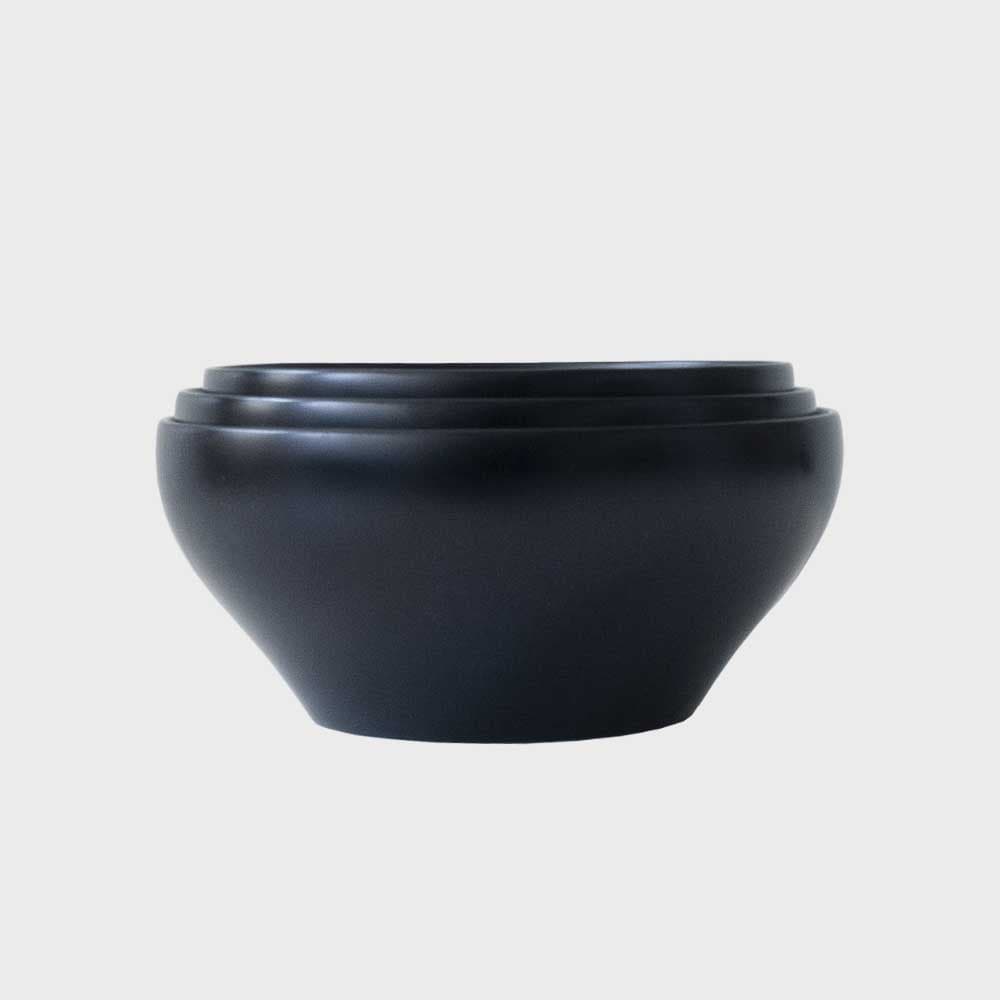
 3 images
Hidehira-nuri Shoboji Lacquer Bowl Set
漆器 秀衡塗 正法寺椀 黒 [ 正法寺椀 応量器 漆器 汁椀 和食器 入れ子 和食器セット 和食 食器 おしゃれ モダン ]
plain blackdesignshop
5.0 / 1 reviews
Japanese name秀衡塗
Hidehira-nuri belongs to Hiraizumi in Iwate Prefecture. Wooden bases, lacquer layers, Genji cloud motifs, yusoku diamonds, and gold decoration carry Oshu Hiraizumi into formal meals, seasonal gatherings, and daily dishes.
Information last updated 121 days ago
3 images漆器 秀衡塗 正法寺椀 黒 [ 正法寺椀 応量器 漆器 汁椀 和食器 入れ子 和食器セット 和食 食器 おしゃれ モダン ]
plain blackdesignshop
5.0 / 1 reviews
First time buying on Rakuten? How residents in Japan order →
Hidehira-nuri is easiest to meet at the scale of a vessel. In Hiraizumi, Iwate Prefecture, bowls and plates carry red and black lacquer, cloud forms known as Genji clouds, yusoku diamond patterns, and gold decoration. The craft sits within the Michinoku GOLD Roman setting, and its character becomes clearest in hand: wood shaped into a base, lacquer built in layers, and gold leaf placed onto objects meant for the table.
The place anchor for Hidehira-nuri is Hiraizumi Town in Iwate Prefecture, together with the wider Oshu Hiraizumi setting. Hidehira-nuri is placed in the Michinoku GOLD Roman group and located in Hiraizumi Town and related areas, connecting lacquer vessels with the region's gold-culture landscape.
The craft is also noted as a nationally designated traditional craft under Japan's economy ministry. For a reader, that context matters when it points back to concrete things: Hiraizumi, lacquerware, gold decoration, and the vessel-making practices that give the name a visible shape.
The recognizable face of Hidehira-nuri is its surface. Vessels are associated with Genji cloud motifs, yusoku diamond patterns, red and black lacquer, and gold decoration. These are close details on bowls and plates, seen near the hand, the meal, and the eye.
Marusan Shikki describes a weighty lacquer-painting expression made with colored lacquer, Genji clouds, and yusoku diamonds. Supporting craft context adds the role of gold leaf, red lacquer, black lacquer, and diamond forms, giving the vessels a clear visual vocabulary tied to the gold culture of the Hiraizumi area.
The origin account links Hidehira-nuri to Oshu Hiraizumi in the late Heian period. Fujiwara no Hidehira, who governed the area, is said to have invited craftspeople from Kyoto and had vessels made with local lacquer and gold. The account is best handled as a transmitted beginning, rather than as a dated first-production event.
Its importance is concrete: it brings together Oshu Hiraizumi, craftspeople from Kyoto, locally produced lacquer, gold, and vessels. Any cultural meaning around Hidehira-nuri rests on those material and place-based details rather than on a name alone.
The surface begins with a wooden base. Craft context describes dried wood, raw lacquer brushed on so the base absorbs it, improved water resistance, help against deformation, cloth reinforcement, repeated coating, drying, polishing, and undercoat, middle coat, and top coat layers.
Gold-leaf decoration comes after those layered steps, clarifying the cloud and diamond forms on the vessel. When a bowl is lifted from the table, the visible shine depends on less visible work: wood, lacquer absorption, cloth reinforcement, polishing, and repeated coating beneath the gold.
Hidehira-nuri is described as tableware for hare-no-hi formal occasions and also for seasonal events, cooking, and casual daily use. That range keeps the lacquer and gold close to real meals, seasonal gatherings, and household dishes.
Marusan Shikki also describes a lacquer-painting experience using many colors of lacquer with a Hidehira-nuri lacquer-painting craftsperson. The word tradition becomes concrete there: a hand holds a tool, color is applied, and a line is drawn across a vessel surface.
Hidehira-nuri draws its strength from Hiraizumi, wooden bases, lacquer layers, Genji clouds, yusoku diamonds, red and black lacquer, and gold leaf. The Fujiwara no Hidehira origin account places it in late-Heian Oshu Hiraizumi; present-day use brings it back to meals, seasonal gatherings, and daily dishes. In a single bowl or plate, wood, lacquer, gold, and motif meet at table scale.
Compiled from public records and official sources; see the recognition links below. Details may change over time.
Where this product is officially registered, designated, or recognized in Japan.
Traditional craft
Designated a Traditional Craft (dentō kōgeihin) by Japan's Ministry of Economy, Trade and Industry.
Sources1
It is written as 秀衡塗 in Japanese. Search Rakuten and other Japanese sites with that spelling — the English name will not bring up the listings.
Hidehira-nuri is lacquerware tied to Hiraizumi in Iwate Prefecture. Its recognizable features include wooden bases, layered lacquer, Genji cloud motifs, yusoku diamond patterns, red and black lacquer, and gold-leaf decoration. Its origin account connects it to late-Heian Oshu Hiraizumi and Fujiwara no Hidehira; current use contexts include formal meals, seasonal events, cooking, daily dishes, and lacquer-painting experiences.
The origin account says Fujiwara no Hidehira invited craftspeople from Kyoto in the late Heian period to make vessels with local lacquer and gold. The production process includes wooden bases, raw lacquer absorption, cloth reinforcement, repeated coating, drying, polishing, and gold-leaf finishing. Its surface design combines Genji cloud motifs, yusoku diamond patterns, and red and black lacquer. Beyond formal settings, Hidehira-nuri is also used for seasonal events, cooking, and daily dishes.
Hidehira-nuri vessels are used at formal meals (hare-no-hi occasions) as functional tableware, not only for display. They are also suited to seasonal gatherings, cooking, and everyday use. Lacquer-painting experience programs let participants work with colored lacquer alongside a Hidehira-nuri craftsperson.
Porous earthenware is usually given a "medome" treatment first — simmer it gently in rice-rinsing water (or water with a little flour), then cool, rinse, and air-dry. This reduces staining and odour absorption. Porcelain normally just needs a wash. Follow the listing where it says otherwise.
Handmade earthenware, pieces with gold or silver overglaze, and lacquerware generally should not go in a dishwasher, microwave, or heated drying cabinet; heat-resistant porcelain usually can. Check the Rakuten listing for the specific piece.
Most options are shelf-stable, boxed, and travel well, so they suit gifting or bringing home. Confirm the final storage and delivery terms on the Rakuten listing.
On Rakuten: the shops listed here right now are designshop. We don't sell directly; purchase, payment, stock, and delivery are all handled on the Rakuten product page.