 3 images
Ishikawa Kaga Lotus Root
加賀野菜 加賀レンコン 約3kg分入り加賀 れんこん 蓮根 加賀伝統野菜石川県産 石川産 国産 国内産 日本産 限定 楽天 通販 価格 特価 販売 お土産
approx. 3 kg越前名産工房
5.0 / 2 reviews
Japanese name加賀れんこん
Around Kosaka, Morimoto, Yakushidani, and the Kahokugata reclaimed land, thick lotus roots are lifted by hoe and water pressure, then grated into the sticky base of Kanazawa hasu-mushi.
Information last updated 119 days ago
3 images加賀野菜 加賀レンコン 約3kg分入り加賀 れんこん 蓮根 加賀伝統野菜石川県産 石川産 国産 国内産 日本産 限定 楽天 通販 価格 特価 販売 お土産
approx. 3 kg越前名産工房
5.0 / 2 reviews
3 images加賀野菜 加賀レンコン 送料無料 約3kg分入り加賀 れんこん 蓮根 加賀伝統野菜石川県産 石川産 国産 国内産 日本産 限定 楽天 通販 価格 特価 販売 お土産
approx. 3 kg越前名産工房
2.0 / 1 reviews
First time buying on Rakuten? How residents in Japan order →
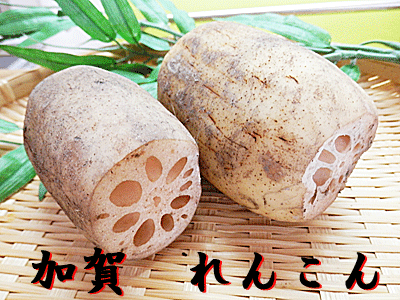
Kaga renkon belongs to the lotus-root fields around Kanazawa in Ishikawa. Its places are specific: Kosaka, Morimoto, Yakushidani, Saida, and the Kahokugata reclaimed land. The fields are known for soil so sticky that a foot can be hard to pull free, with clear Hokuriku water and a rainy climate shaping the work in the paddies. The root is high in starch, strongly sticky, thick-fleshed, and short between nodes; its tip is crisp, while the base becomes mochi-like.
Kaga renkon is a lotus root grown in the Kanazawa area and counted among the city’s fifteen Kaga vegetables. The name is grounded in real fields: the former Kosaka village area, Morimoto, Yakushidani, Saida, and the reclaimed land of Kahokugata.
Those places also mark different ways of working. Kosaka-area roots are associated with hoe digging and mud attached to the harvest, while Kahokugata fields are linked with water digging that uses irrigation water. Together, the districts give Kaga renkon its concrete map: sticky soil, water channels, thick roots, and producers working across several Kanazawa-area growing zones.
Descriptions of Kaga renkon fields often begin with the soil. In Kanazawa, many paddies are so sticky that once a person steps in, pulling a foot back out can be difficult. For the people harvesting the roots, that condition is not scenery; it is the resistance felt in every movement through mud.
Clear Hokuriku water and a rainy climate are also part of the cultivation setting. The point is practical as much as atmospheric: drained muddy fields support hoe digging, while flooded fields and managed water allow water digging. The landscape becomes visible through the method used to bring each root out without damage.
Local accounts trace lotus-root cultivation in Ishikawa back to the Kaga domain period, with accounts involving the fifth lord, Maeda Tsunanori. Later, cultivation took hold around Ohi-machi in Kanazawa, part of the Kosaka area, and the root came to be called Ohi renkon.
In the Meiji 20s, the root gained attention as food and as a market crop, and the name Kosaka renkon appeared. By the middle of the Taisho period, Motooka Daikichi, remembered for expanding production, shipped it under the name Kaga renkon. The current name carries that route from castle-era accounts to Ohi fields, Kosaka fields, and market shipments.
Hoe digging takes place after water is drained from the muddy field. Producers enter the mud and use a hoe to free the buried lotus root, working carefully because a blade in the soil can scar the root. Kosaka, Morimoto, and Yakushidani are described with this method, and mud attached to the harvested root remains part of the Kosaka image.
Water digging works differently. In a flooded field, water from a hose loosens the soil by pressure and helps expose the root. Kahokugata is strongly associated with this method. In colder months, harvesters still enter water that can rise above the knee, using pressure, touch, and experience to find the rhizome in the mud.
Kaga renkon is described through texture as much as place. It is rich in starch, strongly sticky, thick-fleshed, and short between nodes. The tip has a crisp bite, while the base becomes mochi-like; that difference along one root gives cooks several textures to work with.
The grated root is central to hasu-mushi, a Kanazawa dish that relies on sticky grated lotus root. Middle-to-tip sections are described as suited to simmered dishes, lotus-root soup, and grating, while the firmer base suits stir-fried dishes such as kinpira. The cooking logic begins inside the root itself, section by section.
Kaga renkon ships broadly from August to May, carrying the Kanazawa lotus-root season from late summer into spring. A description of the 2010 crop year lists the JA Kanazawa lotus-root producer group at fifty producers, with 34.4 hectares under cultivation across hoe-dug and water-dug fields and 252 tons produced; those figures describe that year’s scale, not a current total.
The work continues after harvest. Roots are sorted into detailed grades, and producers discuss soil and fertilizer management as part of maintaining the characteristic stickiness. The Kosaka Renkon Preservation Association also keeps attention on hoe-dug, mud-attached Kosaka renkon, linking the place name with muddy fields and hand work.
Kaga renkon is easiest to understand through concrete things: Kosaka mud, Kahokugata water digging, short thick nodes, crisp tips, mochi-like bases, and the grated stickiness used in hasu-mushi. Its names moved from Ohi to Kosaka to Kaga, but the work still returns to the same field problem: lifting a fragile lotus root from mud and water without losing the texture that makes it Kanazawa’s own.
Compiled from public records and official sources; see the recognition links below. Details may change over time.
Where this product is officially registered, designated, or recognized in Japan.
Regional collective trademark
Registered as a Regional Collective Trademark with the Japan Patent Office.
Sources1
It is written as 加賀れんこん in Japanese. Search Rakuten and other Japanese sites with that spelling — the English name will not bring up the listings.
Kaga renkon is a lotus root from the Kanazawa area of Ishikawa, with fields in Kosaka, Morimoto, Yakushidani, Saida, and the Kahokugata reclaimed land. It is rich in starch, strongly sticky, thick-fleshed, and short between nodes; the tip is crisp and the base is mochi-like. Hoe digging, water digging, and grated use in hasu-mushi define its place in Kanazawa foodways.
Kaga renkon is a lotus root grown around Kanazawa and included among the city's fifteen Kaga vegetables. Kanazawa-area fields are described as having very sticky soil, clear Hokuriku water, and a rainy climate. Harvesting includes hoe digging in drained muddy fields and water digging with water pressure in flooded fields. Local accounts connect lotus-root cultivation in Ishikawa to the Kaga domain period and later names such as Ohi renkon, Kosaka renkon, and Kaga renkon.
Grated Kaga renkon is used in dishes such as hasu-mushi. The base section is firmer and suited to stir-fried dishes such as kinpira. The middle and tip sections are used in simmered dishes and lotus-root soup, or grated.
Storage varies by product — shelf-stable, refrigerated, or frozen — and is stated on the packaging and the Rakuten listing. Shelf-stable processed foods usually need refrigerating once opened and eating within a few days; chilled and frozen items go straight into storage on arrival. Treat the best-before date on the physical packaging as authoritative.
Most options are shelf-stable, boxed, and travel well, so they suit gifting or bringing home. Confirm the final storage and delivery terms on the Rakuten listing.
On Rakuten: the shops listed here right now are 越前名産工房. We don't sell directly; purchase, payment, stock, and delivery are all handled on the Rakuten product page.