 2 images
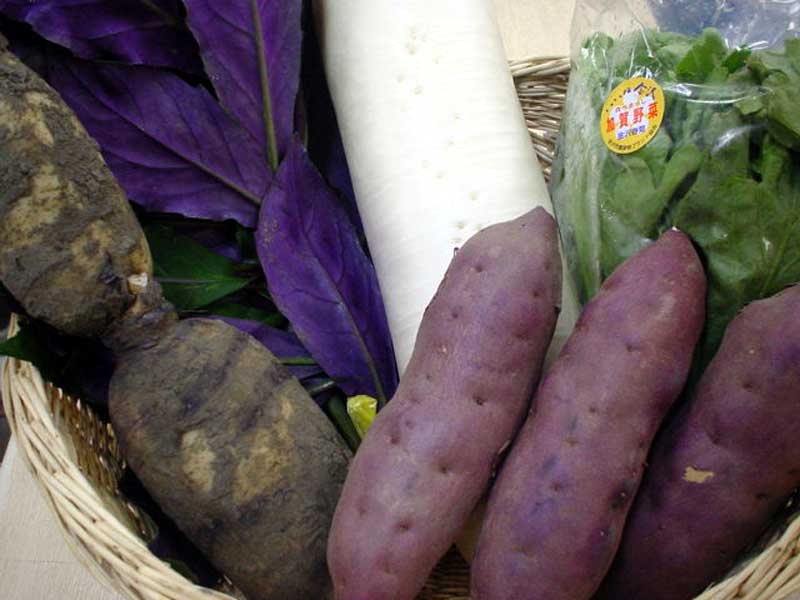
Kaga Vegetables Trial Set
加賀野菜セット お試し版 5品 1980円 送料込み
5 varieties近江町北形青果
4.1 / 97 reviews
Japanese name加賀野菜
Kintoki-so, Kaga lotus root, and Gensuke daikon carry Kanazawa fields into vinegared dishes, lotus-root mushi, oden, and New Year meals.
Information last updated 120 days ago
2 images加賀野菜セット お試し版 5品 1980円 送料込み
5 varieties近江町北形青果
4.1 / 97 reviews
First time buying on Rakuten? How residents in Japan order →
The name Kaga vegetables gathers fifteen Kanazawa vegetables under one practical line: each was cultivated before 1945 and is still grown in Kanazawa. In the castle town, seasonal specialty vegetables have been carried forward since the feudal period. The group is easiest to read through concrete things: red-purple kintoki-so leaves with a slippery texture, sticky Kaga lotus root, Gensuke daikon that holds in long simmering, and sweet potatoes tied to sandy districts such as Goro-jima. These vegetables enter vinegared dishes, tempura, lotus-root mushi, Kanazawa oden, and New Year meals, so Kanazawa’s seasonality is carried by named crops and named dishes.
The current group includes kintoki-so, Kaga thick cucumber, bamboo shoot, Utsugi red-skinned chestnut pumpkin, Heta purple eggplant, Kaga runner bean, red zuiki, Kaga lotus root, sweet potato, Kanazawa Ippon Futonegi, Gensuke daikon, Kanazawa shungiku, Futatsuka karashina, Kanazawa seri, and kuwai. The list ranges across leaves, roots, stems, beans, and seasonal vegetables, but the shared line is precise: all fifteen were cultivated before 1945 and are still cultivated in Kanazawa. That line keeps the name attached to particular crops, fields, and uses rather than to any vegetable grown in the city.
Kaga vegetables sit among Kanazawa district names such as Hanazono, Yuwaku-Yasuhara, Kosaka-Kahokugata, Goro-jima-Awasaki-Ono, and Uchikawa-Togashi. Sweet potatoes are tied to sandy ground around Goro-jima and related coastal districts, while Kaga lotus root is linked with clayey soil and the sticky, mochi-like texture people notice at the table. Place is not background decoration here. It gives the vegetables a field, a soil, and a way for texture to belong to a Kanazawa district.
Kintoki-so starts with color: red-purple leaves and a softly slippery bite, clean in vinegared dishes and fragrant when fried as tempura. Kaga lotus root is known for its stickiness and mochi-like chew; when grated and steamed into hasu-mushi, the root’s body holds the dish together. Gensuke daikon becomes soft to the center while resisting collapse, which makes it suited to the long simmer of Kanazawa oden. Kanazawa shungiku adds another kind of vegetable presence, with soft leaves and a clear aroma.
The table makes the fifteen-item family easier to understand. Kintoki-so goes into vinegared dishes and tempura, and red zuiki brings a bright red color to vinegared preparations. Kaga thick cucumber can be simmered, pickled, served in vinegared dishes, or used in salad; bamboo shoot tips suit soup and dressed dishes, the middle suits tempura and simmering, and the base can be stir-fried or cooked into bamboo-shoot rice. Kaga lotus root becomes hasu-mushi, kintoki-so and Kaga lotus root appear as local ingredients in Kaga cuisine, Gensuke daikon belongs in Kanazawa oden, and kuwai enters New Year cooking because of its sprouting shape.
Kaga vegetables also carry a history of loss and recovery. As growers sought higher yield and disease resistance, and as consumers leaned toward neat appearance and easier cooking, harder-to-grow fixed varieties with uneven shapes lost space in the market and the number of producing farms declined. Local institutions in Kanazawa later worked through the agricultural-products brand association to promote production and wider use. Ryo Matsushita, born in Kanazawa, trained in plant genetics and took over the Matsushita seed shop in 1962, a fifth-generation business dating to 1861; in 1991 he called on producers and distributors to establish the Kaga Vegetable Preservation Conference. In this setting, preservation means seeds, fields, growers, distributors, and dishes staying connected.
A red-purple leaf in a vinegared dish, the sticky body of lotus-root mushi, and a soft piece of daikon in Kanazawa oden all give concrete entry points into Kaga vegetables. The fifteen items do not collapse into one flavor. They place Kanazawa district names such as Hanazono, Kahokugata, and Goro-jima beside a cultivation line that reaches from before 1945 into today’s fields.
Compiled from public records and official sources; see the recognition links below. Details may change over time.
Where this product is officially registered, designated, or recognized in Japan.
Regional collective trademark
Registered as a Regional Collective Trademark with the Japan Patent Office.
Sources1
It is written as 加賀野菜 in Japanese. Search Rakuten and other Japanese sites with that spelling — the English name will not bring up the listings.
Kaga vegetables are a fifteen-item vegetable group tied to Kanazawa. Each item was cultivated before 1945 and is still grown in the city. The group includes kintoki-so, Kaga lotus root, Gensuke daikon, kuwai and other crops, with concrete links to red-purple leaves, sticky texture, simmering strength, vinegared dishes, lotus-root mushi, Kanazawa oden and New Year meals. After producing farms declined, Kanazawa institutions and Ryo Matsushita helped keep cultivation and eating practices connected.
The fifteen items include kintoki-so, Kaga thick cucumber, bamboo shoot, Utsugi red-skinned chestnut pumpkin, Heta purple eggplant, Kaga runner bean, red zuiki, Kaga lotus root, sweet potato, Kanazawa Ippon Futonegi, Gensuke daikon, Kanazawa shungiku, Futatsuka karashina, Kanazawa seri and kuwai. Kanazawa district names linked to the vegetables include Hanazono, Yuwaku-Yasuhara, Kosaka-Kahokugata, Goro-jima-Awasaki-Ono and Uchikawa-Togashi. Kaga vegetables lost ground as higher yield, disease resistance, neat appearance and easy cooking were prioritized, and producing farms decreased. Ryo Matsushita called on producers and distributors and established the Kaga Vegetable Preservation Conference in 1991.
Kintoki-so is eaten in vinegared dishes and tempura, Kaga thick cucumber in simmered dishes, vinegared dishes, salads and pickles, and bamboo shoot in clear soup, tempura, simmered dishes and takenoko gohan (bamboo shoot rice). Kaga lotus root is grated and steamed into hasu-mushi, a representative Kanazawa dish, and both kintoki-so and Kaga lotus root count among the local ingredients of Kaga cuisine. Gensuke daikon is a staple in Kanazawa oden, Kanazawa Ippon Futonegi becomes sweeter and more flavorful in cold weather and suits nabe (hot pot) and sukiyaki, and kuwai is used in Kanazawa's New Year osechi cooking because its sprouting shape is considered auspicious.
Storage varies by product — shelf-stable, refrigerated, or frozen — and is stated on the packaging and the Rakuten listing. Shelf-stable processed foods usually need refrigerating once opened and eating within a few days; chilled and frozen items go straight into storage on arrival. Treat the best-before date on the physical packaging as authoritative.
Most options are shelf-stable, boxed, and travel well, so they suit gifting or bringing home. Confirm the final storage and delivery terms on the Rakuten listing.
On Rakuten: the shops listed here right now are 近江町北形青果. We don't sell directly; purchase, payment, stock, and delivery are all handled on the Rakuten product page.