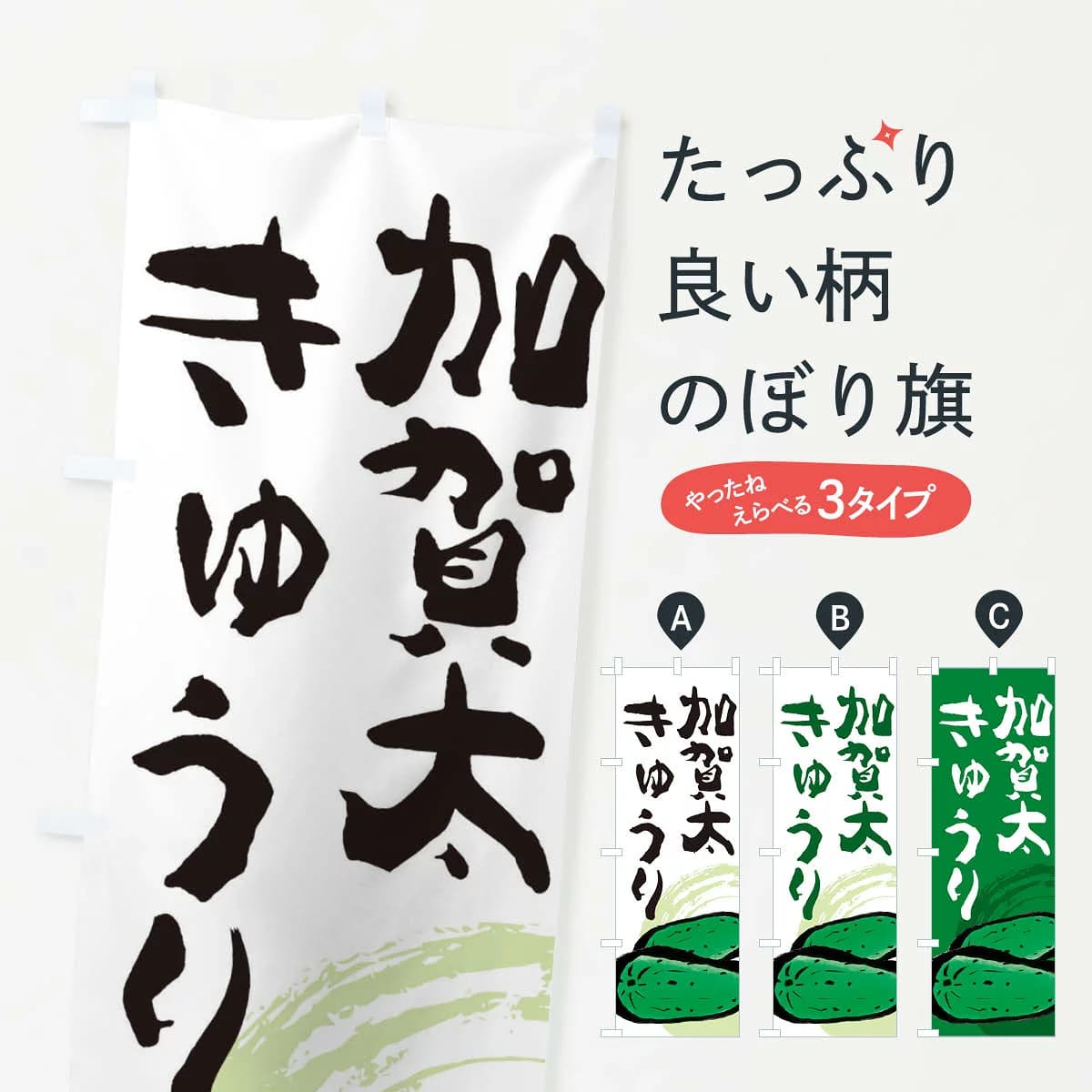
 3 images
Kaga Thick Cucumber Nobori Flag
【ネコポス送料360】 のぼり旗 加賀太きゅうりのぼり EWYR 冷凍果物・冷し野菜 グッズプロ 【名入れできます+1017円】
グッズプロ
Japanese name加賀太きゅうり
Kaga futokyuri links Hisayasu seed sharing, sandy Uchiki fields, and summer cooking through a cucumber that can reach about 600 grams.
Information last updated 21 days ago
3 images【ネコポス送料360】 のぼり旗 加賀太きゅうりのぼり EWYR 冷凍果物・冷し野菜 グッズプロ 【名入れできます+1017円】
グッズプロ
First time buying on Rakuten? How residents in Japan order →
In Kanazawa, Ishikawa, Kaga futokyuri is remembered first by its scale: about 22 to 27 centimeters long, 6 to 7 centimeters across, and sometimes around 600 grams per fruit. Beneath the deep-green skin is flesh that is thick yet soft, with the familiar flavor of cucumber and enough keeping quality to move through vinegar dishes, shallow pickles, ankake, stir-fries, and soups.
Kaga futokyuri changes the way a cook reads a cucumber. Around 25 centimeters long and about 7 centimeters wide, it has a weight and roundness that ask for peeling, cutting, simmering, or pickling rather than a single thin-sliced use. Once the firm green skin is removed, the thick watery flesh can be eaten raw or cooked.
That flesh gives the cucumber its range in Kanazawa kitchens. It appears in vinegar dishes, shallow pickles, and ankake, and when heated it softens while keeping cucumber flavor. Size, texture, and water content are the practical traits behind its local cooking life.
The documented beginning sits in Hisayasu-machi, Kanazawa, in 1936. Farmer Toshio Yonebayashi received seed of a short, thick Tohoku cucumber used for simmered dishes and shared it with seven nearby vegetable growers. The early fruit was closer to a gourd, yellowish in color and triangular in shape.
Over the years, natural crossing with Kanazawa Fushinari cucumber changed that fruit. By around 1952, the triangular shape had become rounder, and the yellow color had turned deep green, giving Kanazawa the thick cucumber form known today. Its continuity is concrete: seed, neighboring fields, natural crossing, and visible changes in color and shape.
The production landscape shifted as Kanazawa changed. Around 1970, cultivation moved from the urbanizing Sanma district toward the sandy Uchiki district, and growing methods moved from open fields toward house and greenhouse cultivation. Uchiki’s sandy ground is now one of the place names that helps explain the cucumber’s present setting.
Current production areas include Uchiki-machi in Kanazawa and Kahoku City. Shipments run from April through November, reaching local markets as well as Tokyo and the Kansai area. The cucumber’s place is therefore built from fields, sand, protected cultivation, and a long shipping season rather than from a label alone.
For Kaga futokyuri ankake, the kitchen sequence is direct: peel the cucumber, remove the seeds, cut it into pieces, simmer it slowly, season it, and finish the dish with starch or kuzu for a thickened sauce. The thick flesh turns soft with heat and holds the seasoned liquid.
The same cucumber can also stay crisp. It is used raw, dressed with vinegar, lightly pickled, stir-fried, or added to soup; local promotion in 2024 also showed mapo-style dishes, salt-koji stir-fries with Noto pork, curry, grilled uses, and side dishes. The range follows one material fact: a large, thick, water-rich cucumber that works both fresh and cooked.
Kaga futokyuri stays visible to children through school meals in Kanazawa, where side dishes using the thick cucumber are served. In 2024, about 12,000 cucumbers were distributed to 51 municipal elementary schools with leaflets on knowledge, recipes, and storage.
The same year, tasting events at Omicho Market introduced raw, simmered, and grilled preparations. JA Zen-Noh Ishikawa described 2.99 hectares and 13 growers at the time, while producers exchanged cultivation information and worked with issues such as succession and idle land in Uchiki. Continuity here is daily work: lunch trays, tasting tables, sandy fields, and growers comparing what works.
Kaga futokyuri is best understood through concrete details: a 22-to-27-centimeter fruit, a weight that can reach about 600 grams, Hisayasu seed sharing in 1936, natural crossing with Kanazawa Fushinari cucumber, the move to Uchiki’s sandy fields, and the peeled, seeded, thickened ankake dish of Kanazawa summers. From fields to school lunches, its thick flesh and clear cucumber flavor keep a regional vegetable present in ordinary meals.
Compiled from public records and official sources; see the recognition links below. Details may change over time.
Where this product is officially registered, designated, or recognized in Japan.
Regional collective trademark
Registered as a Regional Collective Trademark with the Japan Patent Office.
Sources1
It is written as 加賀太きゅうり in Japanese. Search Rakuten and other Japanese sites with that spelling — the English name will not bring up the listings.
Kaga futokyuri is a thick cucumber from Kanazawa, Ishikawa, growing about 22 to 27 centimeters long and 6 to 7 centimeters across, with fruit reaching about 600 grams. It dates to 1936, when farmer Toshio Yonebayashi of Hisayasu shared short, thick Tohoku cucumber seed with seven nearby growers. Natural crossing with Kanazawa Fushinari cucumber gave it a rounder, deep-green form by around 1952. Production later shifted from Kanazawa's Sanma district to the sandy Uchiki district.
Kaga futokyuri has thick but soft flesh, keeps well, and retains cucumber flavor. The early fruit was yellowish and triangular, before crossing with Kanazawa Fushinari cucumber produced the rounder, deep-green form. Around 1970, growing methods also shifted toward house and greenhouse cultivation in the Uchiki district. In 2024, about 12,000 Kaga futokyuri cucumbers were distributed to 51 Kanazawa municipal elementary schools with leaflets on knowledge, recipes, and storage.
Kaga futokyuri ankake (あんかけ) is prepared by peeling and seeding the cucumber, cutting and slowly simmering it, then finishing with a starch-thickened sauce; the thick flesh softens when heated. It is also used raw, in vinegar dishes, shallow pickles, and salads, which highlight its cucumber flavor and crisp texture. Side dishes made with it are served in school meals, and it is also used in simmered, grilled, mapo-style, and salt-koji stir-fried dishes with Noto pork, as well as kimchi, curry, and boxed lunches.
Storage varies by product — shelf-stable, refrigerated, or frozen — and is stated on the packaging and the Rakuten listing. Shelf-stable processed foods usually need refrigerating once opened and eating within a few days; chilled and frozen items go straight into storage on arrival. Treat the best-before date on the physical packaging as authoritative.
Most options are shelf-stable, boxed, and travel well, so they suit gifting or bringing home. Confirm the final storage and delivery terms on the Rakuten listing.
On Rakuten: the shops listed here right now are グッズプロ. We don't sell directly; purchase, payment, stock, and delivery are all handled on the Rakuten product page.