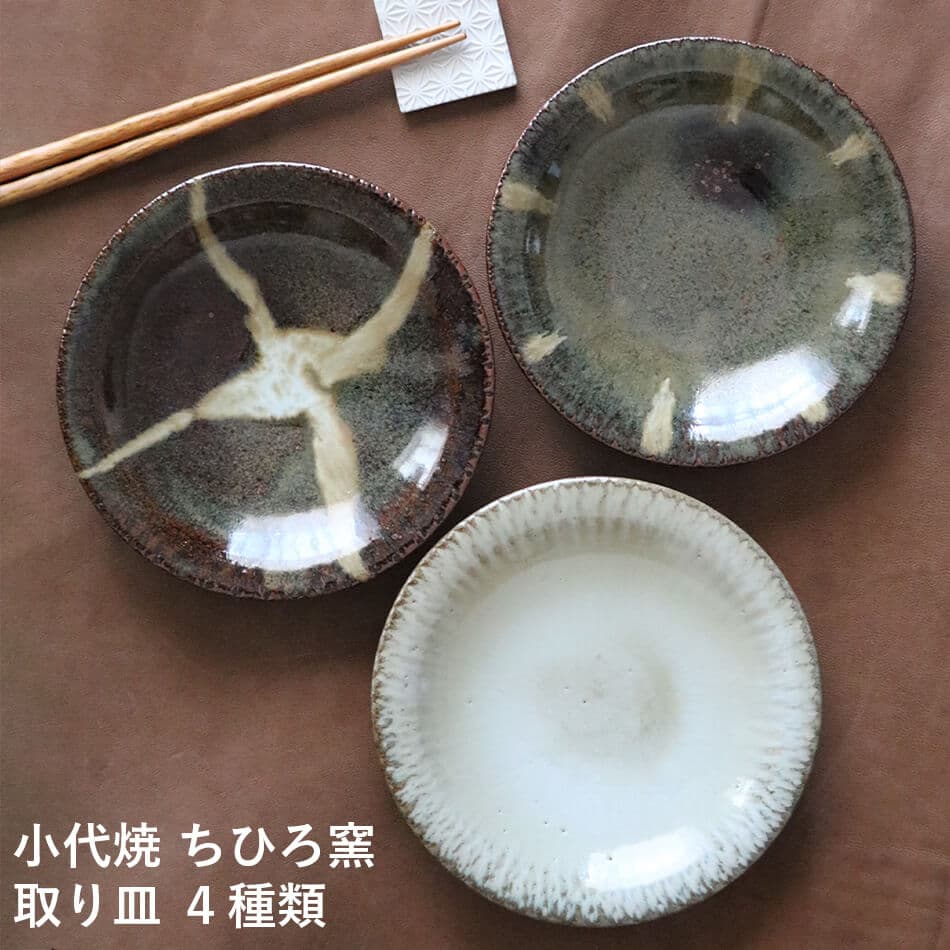
 3 images
Shodai Ware Shodai Hontani Chihiro Kiln Rimmed Small Plate
取り皿 小代焼 小代本谷ちひろ窯 リム皿 小皿 3種類から選べる 調味料入れ 陶器 食器 作家 おしゃれ 器 和食器 かわいい 可愛い
14.5 cmReboot Life
Japanese name小代焼
Around Mt. Shodai, iron-rich clay, straw ash, wood ash, feldspar, and high kiln heat shape a ceramic family that moves between tea utensils and everyday vessels.
Information last updated 7 days ago
3 images取り皿 小代焼 小代本谷ちひろ窯 リム皿 小皿 3種類から選べる 調味料入れ 陶器 食器 作家 おしゃれ 器 和食器 かわいい 可愛い
14.5 cmReboot Life
 3 images
前野智博(ちひろ窯)作 コーヒー碗 丸型 青/生成 各色 小代焼 カップ&ソーサー 珈琲碗皿 小代焼贈り物 小代焼プレゼント 小代焼ギフト 和食器 新築お祝い 退職お祝い 母の日 父の日 敬老の日 珈琲碗皿贈り物 珈琲碗皿ギフト 和雑貨 四季彩堂
blue / ecru四季彩堂 楽天市場店
First time buying on Rakuten? How residents in Japan order →
Shodai ware begins in northern Kumamoto, around the foot of Mt. Shodai. Kiln areas are named around Arao, Nagasu, Nankan, Uki, Kashima, and nearby Kumamoto sites, with the Arao-Tamana region often giving the ware its strongest place anchor. Its surface carries iron-rich Shodai clay, small stone particles, deep ground colors, and glaze that runs downward in white, blue, yellow, or iron-toned movement. The result is a vessel family tied closely to local soil, tea use, and ordinary table life.
The first anchor for Shodai ware is place. Around the northern Kumamoto foot of Mt. Shodai, the ware has been made for about four hundred years. Its production map includes Arao, Nagasu, Nankan, Uki, Kashima, and nearby Kumamoto sites; the broader place frame remains Mt. Shodai, the Arao-Tamana region, and kiln communities in northern Kumamoto.
That place connection is physical. Shodai clay contains much iron and many small stone particles, giving fired vessels a rough, earthy surface. The strength often associated with Shodai ware comes from this material base: local clay, a high firing temperature, and glazes that move visibly across the form.
The making process starts with raw clay. The work includes blending the clay, levigating it with water, aging it, kneading it, shaping it, trimming it, drying it, bisque firing it, glazing it, loading the kiln, and carrying out the final firing. Through those steps, clay from around Mt. Shodai becomes bowls, jars, plates, tea utensils, and household vessels.
The surface is made to keep some memory of the material. Levigation and aging help make the clay workable, shaping and trimming define the vessel, and firing fixes the iron-rich body under glaze. The small stones and rough feel remain part of the finished character, so touch matters as much as color when reading a Shodai piece.
The most visible mark of Shodai ware is the way glaze moves. Straw ash, wood ash, feldspar, iron glaze, bamboo-grass ash, and thatch ash form mixtures that can produce blue, yellow, and white Shodai groups. A dark ground glaze may sit under a pale upper glaze, then heat pulls the surface downward into runs, pools, and uneven bands.
The movement comes from both hand and kiln. Makers use pouring, ladling, brushing, blowing, double glazing, and related applications to place glaze on the body; high kiln heat then changes that placement. Deep indigo and blue-green grounds with white glaze melting into them give Arao-Tamana Shodai ware its bold flowing-glaze presence within Kumamoto ceramics.
Shodai ware has long belonged to both tea practice and daily use. It is said to begin around 1632, when potters connected with the Hosokawa transfer to Higo opened a climbing kiln at the foot of Mt. Shodai. As a Higo domain kiln, it produced tea-ceremony utensils as well as many ordinary household wares.
The older name Gotoku-yaki belongs in that everyday setting. It was associated in Kumamoto with five expectations, including resistance to rot, avoiding lingering fish smells, keeping away moisture, removing poison, and long life. Those are historical use associations rather than modern performance claims; what they show clearly is that Shodai ware was understood as pottery to hold, serve, store, wash, and use.
The timeline includes both continuity and decline. Shodai ware belongs among Kumamoto ceramics that began in the early Edo period in the Arao-Tamana region, and its remembered origin is also tied to the 1632 kiln story at Mt. Shodai. In the Meiji period, competition from Arita and Seto wares contributed to a decline.
The later revival is attached to named people rather than vague nostalgia. Twentieth-century makers such as Chikashige Jitaro and Jojima Heijiro helped restore Shodai ware. Their work kept the practical chain visible: iron-rich local clay, flowing ash glaze, tea utensils, household vessels, and kiln sites in northern Kumamoto.
Kumamoto ceramics form a varied map. Takada ware from the Yatsushiro region, pottery from Hitoyoshi-Kuma, and porcelain traditions from Amakusa and Uto sit alongside Shodai ware from the Arao-Tamana region. Within that landscape, Shodai ware is singled out for bold flowing-glaze decoration and for its continuation into the present.
In 2003, Shodai ware was designated a national traditional craft. For readers, the point of that designation is concrete: the ware is bound to daily-use objects, hand-based major processes, inherited techniques, traditional raw materials, and a producer community working within a defined region. On the vessel itself, those conditions appear as rough Shodai clay, ash glaze, and a surface made active by kiln heat.
Shodai ware is easiest to understand through things a hand can recognize: rough clay from around Mt. Shodai, iron in the body, ash glaze running down a form, a tea utensil, a household bowl. Its history moves through Higo domain kilns, Meiji-period decline, twentieth-century revival, and continuing kiln work in northern Kumamoto. The meaning stays in the vessel: soil, glaze, fire, and use.
Compiled from public records and official sources; see the recognition links below. Details may change over time.
Where this product is officially registered, designated, or recognized in Japan.
Traditional craft
Designated a Traditional Craft (dentō kōgeihin) by Japan's Ministry of Economy, Trade and Industry.
Sources1
It is written as 小代焼 in Japanese. Search Rakuten and other Japanese sites with that spelling — the English name will not bring up the listings.
Shodai ware is a ceramic family from northern Kumamoto, centered on the foot of Mt. Shodai and the Arao-Tamana region. It uses iron-rich Shodai clay with small stone particles, along with straw ash, wood ash, feldspar, and iron glaze fired at high temperature to create blue, yellow, and white flowing glazes. Its origin traces to around 1632, serving Higo domain tea practice and household use, and it was revived in the twentieth century after Meiji-era decline.
Named production areas include Arao, Nagasu, Nankan, Uki, and Kashima in the Kumamoto Traditional Crafts Center account. Glaze materials also include bamboo-grass ash and thatch ash, producing distinct blue, yellow, and white Shodai groups. Pouring, ladling, brushing, blowing, and double glazing are among the methods used to create Shodai ware's flowing surface. One origin account links Shodai ware's start to the Hosokawa clan's transfer to Higo, when a climbing kiln was opened at Mt. Shodai.
Higo domain kilns produced both tea utensils and everyday tableware, so Shodai ware fits both tea settings and ordinary household use. The old name Gotoku-yaki reflects traditional expectations of resisting rot, avoiding fishy odors, and keeping away moisture, useful context for practical vessels rather than modern claims. Appreciation of Shodai ware often centers on the movement and color variation of its flowing glazes.
Porous earthenware is usually given a "medome" treatment first — simmer it gently in rice-rinsing water (or water with a little flour), then cool, rinse, and air-dry. This reduces staining and odour absorption. Porcelain normally just needs a wash. Follow the listing where it says otherwise.
Handmade earthenware, pieces with gold or silver overglaze, and lacquerware generally should not go in a dishwasher, microwave, or heated drying cabinet; heat-resistant porcelain usually can. Check the Rakuten listing for the specific piece.
Most options are shelf-stable, boxed, and travel well, so they suit gifting or bringing home. Confirm the final storage and delivery terms on the Rakuten listing.
On Rakuten: the shops listed here right now are Reboot Life, 四季彩堂 楽天市場店. We don't sell directly; purchase, payment, stock, and delivery are all handled on the Rakuten product page.